
This past Sunday morning, a bird thudded into one of our windows. I wasn’t there to witness it, but my son told me about it later, when I came into the room where he was playing video games.
Was it the Swainson’s thrush I’d seen by the garage earlier that morning? Or one of the cardinals that frequent our backyard? He couldn’t say.
Whatever the species, I could only hope it flew away and survives today. But I know the odds aren’t good, as most birds that don’t die upon impact die later from their internal injuries.
And if my son hadn’t told me, I never would have known. How many times has a bird crashed into our windows, with no one there to witness it?
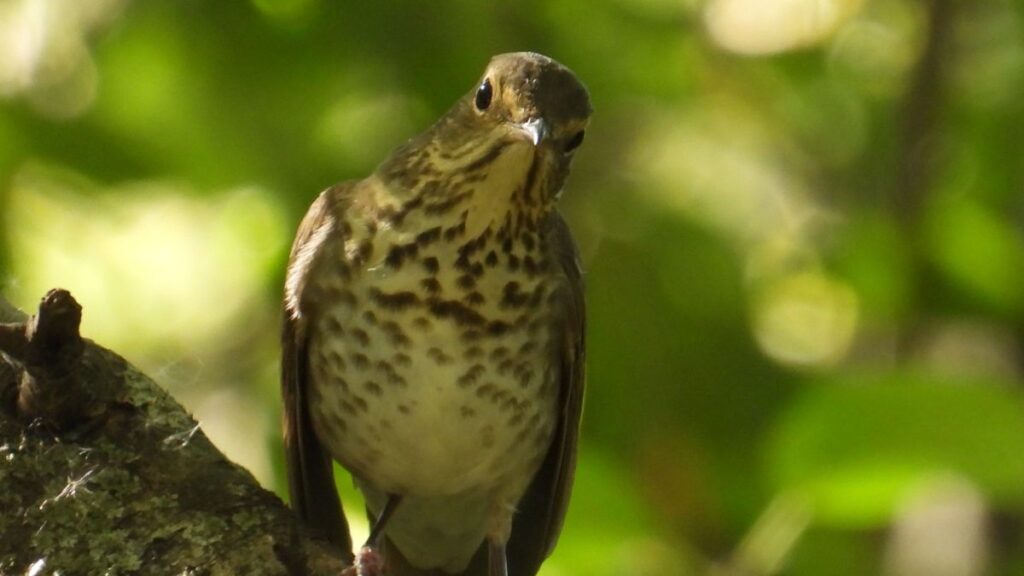
Glass is their kryptonite
Birds may be able to navigate via stars and the earth’s magnetic field, but one thing they don’t see is glass. They see reflections of trees and sky instead, and don’t recognize windows as the solid killers they are. As a result, building collisions are one of the top three causes of bird mortality, after habitat loss and outdoor cats.
However, we can help. We can keep cats indoors. We can turn off lights at night to not disorient migrating birds. We can make sure any new windows installed have bird-friendly glass. And even if we have old windows, there are things we can do.
In a pretty high-profile case last summer, Chicago’s McCormick Place installed window film that decreased bird deaths by 95 percent. This was after bird monitors collected 1,000 dead migratory birds there on a single morning in October 2023.
After my son told me about the bird hitting our window, I knew I didn’t want our home to be the cause of death for even one bird.
An outside job
So what can you do to make glass visible to birds? First, treat the exterior of windows. Anything you do on the inside is not going to be effective. And second, mind the gaps. Each solution has specific spacing requirements (and a scattering of hawk decals isn’t effective either).
The American Bird Conservancy has a database of solutions and products. Here’s a sampling:
- Install insect screens on the outside of windows.
- Draw or paint designs on the outside of windows.
- Apply strips of tape every 2 inches horizontally or every 4 inches vertically (like ABC Bird Tape) to the outside of windows.
- Hang nylon cords vertically 4 inches apart (like Accopian Bird Savers) on the outside of windows.
- Apply decals in a 2×2-inch repeating pattern (like Feather Friendly DIY markers) on the outside of windows.
It does take work
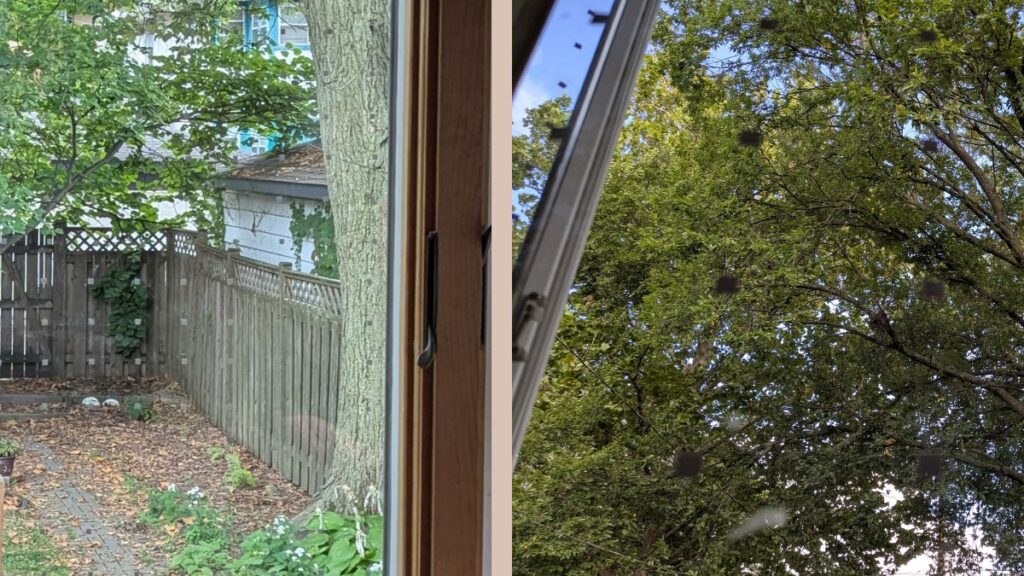
The windows I wanted to treat open out into our backyard, where they reflect a (bird-friendly) American elm. But because these windows crank open outward, the hanging cords weren’t going to work, and we’re not able to put insect screens on the outside. (Thankfully, most of our other windows do have exterior screens.)
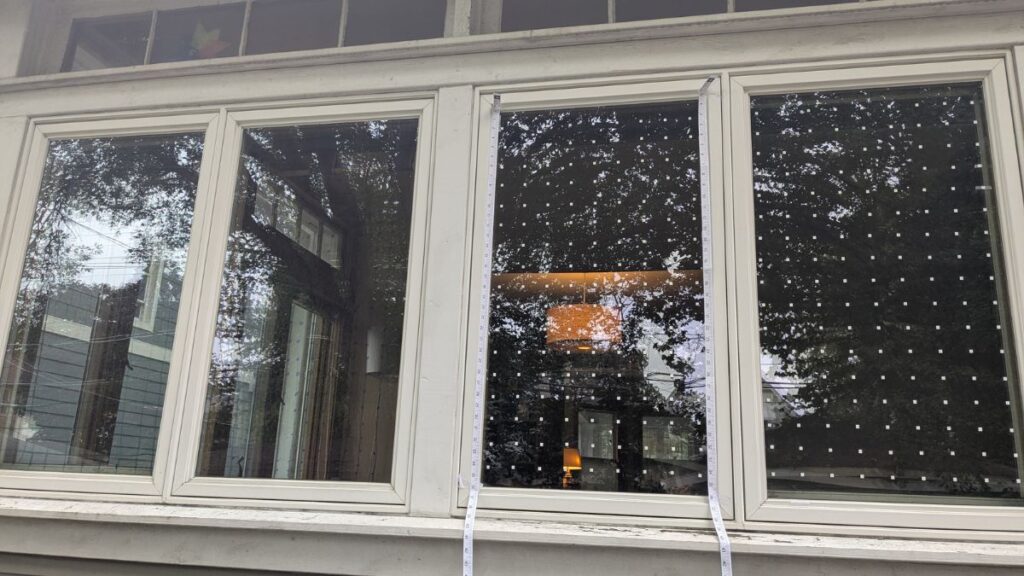
The first thing I did, for a temporary fix, was take a dry-erase marker to the windows and draw dots all over them.
The next day, after some research, I ordered Feather Friendly DIY markers in white. These come in rolls of ¼-inch markers spaced 2 inches apart. (I will say I went to order them from the company itself, but balked at the $20 shipping fee from Canada. So I ordered a few rolls from a seller on Amazon instead.)
When they arrived a day later, I rolled up my sleeves and got to work on what would turn out to be a frustrating, but ultimately satisfying project.
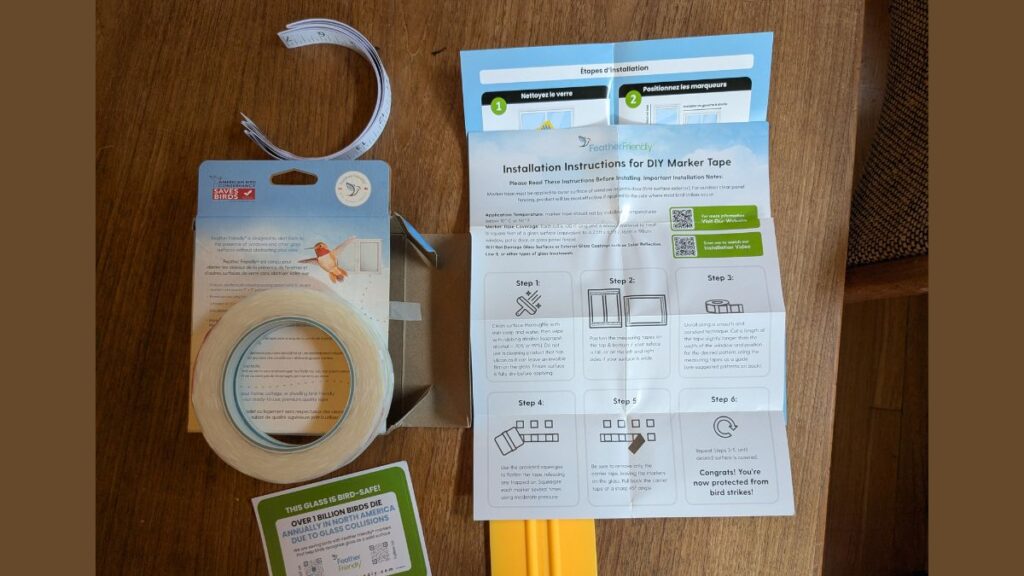
It’s … a process
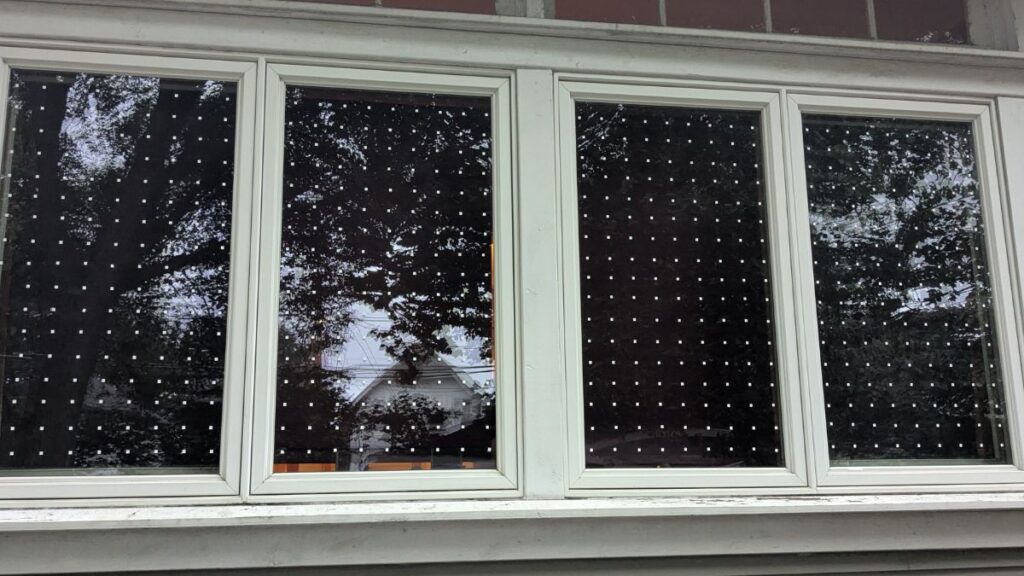
Applying these dot stickers was quite the process. The first window took me more than an hour to do. In total, these four windows (each about 19×36 inches) took 4 hours, using one full roll of tape, plus a bit of the second roll.
And I’ll say, I don’t know that I would recommend this method to anyone who wasn’t totally committed. You have to really love birds to spend the time washing the window with soap and water, wiping it with rubbing alcohol, waiting for it to dry completely, taping on paper rulers to be sure to space the dots exactly 2 inches apart, and then going through the most frustrating, time-consuming part of the whole thing: trying to get the dots to adhere to the glass.
What you do is this:
- Roll out a length of tape and press it down on the window (outside, of course).
- Then take this plastic scraper/squeegee thing and flatten the tape, pressing down and really rubbing it over the dots. You have to do it pretty hard.
- Then you try to peel the tape back at a 45-degree angle to leave only the dots. This was the most frustrating part of the whole thing, because it worked only maybe 75 percent of the time (maybe). Many dots did not adhere and needed extra, individualized coaxing.
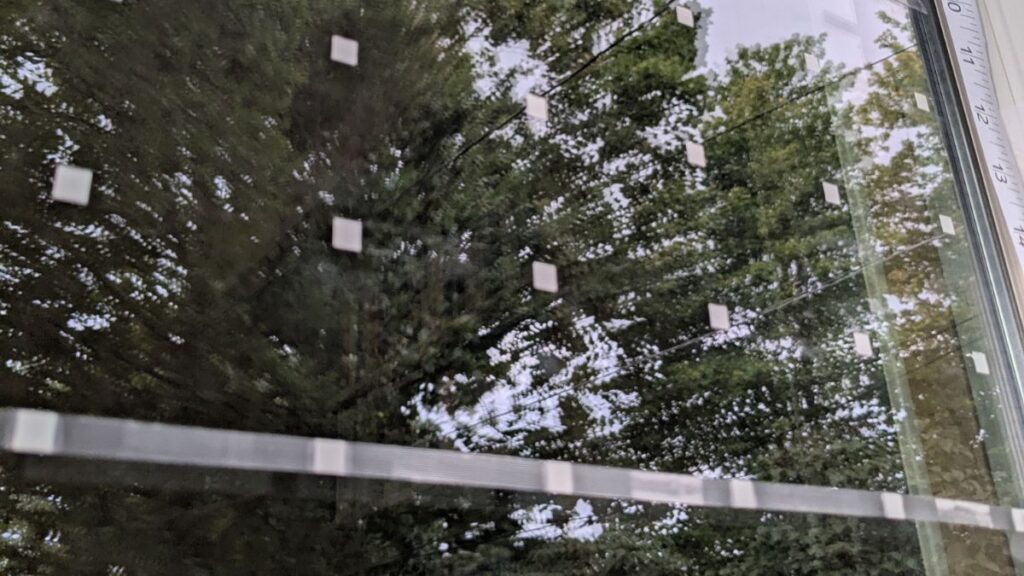
Lights out, dots on, can’t lose
I share this honest reflection not to discourage anyone from treating their windows, but to help illuminate this specific DIY process and help you know what you may be getting into.
I like the end result here, but if it were an option for me, I think I’d look into the hanging cord solution instead.
Either way, I’m glad I did what I could and treated these windows.
Resources
Chicagoland
Bird Friendly Chicago
Bird-Friendly Chicago is an alliance to promote a safer urban environment for birds through improved lighting, landscaping, and glass. They have been leading the charge for Chicago to adopt a bird-friendly building ordinance.
Chicago Bird Collision Monitors
Thank whatever’s good in the world for the Chicago Bird Collision Monitors, a nonprofit group of passionate advocates for birds. Every early morning during spring and fall migrations, CBC volunteers go out in downtown Chicago to look for dead and injured birds. The ones they can save, they take to wildlife rehabs. The ones they can’t, they take to the Field Museum, for scientific and education purposes. If you find a dead or injured bird, call their hotline at 773-988-1867.
National
American Bird Conservancy
The American Bird Conservancy is dedicated to conserving wild birds and their habitats. ABC is a leader in the mission to prevent window collisions.
Bird Collision Prevention Alliance
The Bird Collision Prevention Alliance is a coalition that has worked since 2024 “to promote innovative glass treatments, responsible lighting practices, and collaborative action to protect birds.”
Cornell Lab of Ornithology
Watch: It’s Clear—Glass Kills. How to Prevent Bird Collisions at Your Home
Leave a Reply