
If you’re out for a walk in the park and come across someone using binoculars, I think you’re obligated to ask, “Seeing anything good?”
It always flusters me, though, when I’m on the receiving end. What do you say first? How do you narrow it down? (I have similar feelings about “What’s your favorite song?”)
Anything good? It’s all good!
Anyway, here are eight good (and great) birds I’ve seen this fall in Chicagoland.
1. Great blue heron
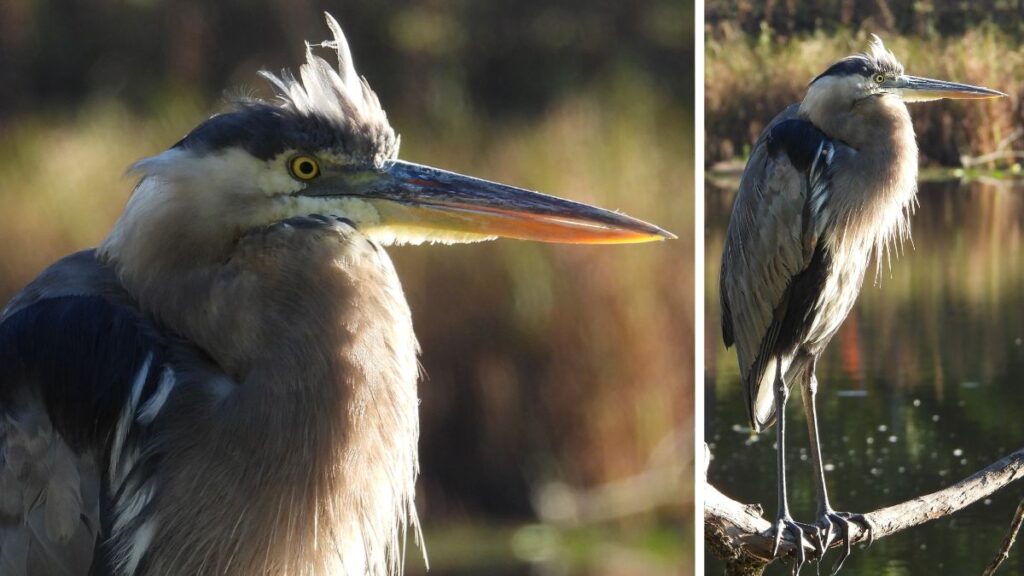
While they may not be as exciting as fresh fall warblers here for a limited time, I’m always going to lead with the great blue heron if there’s one around.
Maybe the other person even brought it up first. Maybe they called it a crane, but we both know we’re talking about the same bird. Everyone can see this big honking dinosaur of a bird without binoculars, and we can all agree it’s majestic.
Great blue herons are “partial migrants,” and I’ve seen them in my local city park most months except January and February, when the lagoon has frozen over.
2. Merlin
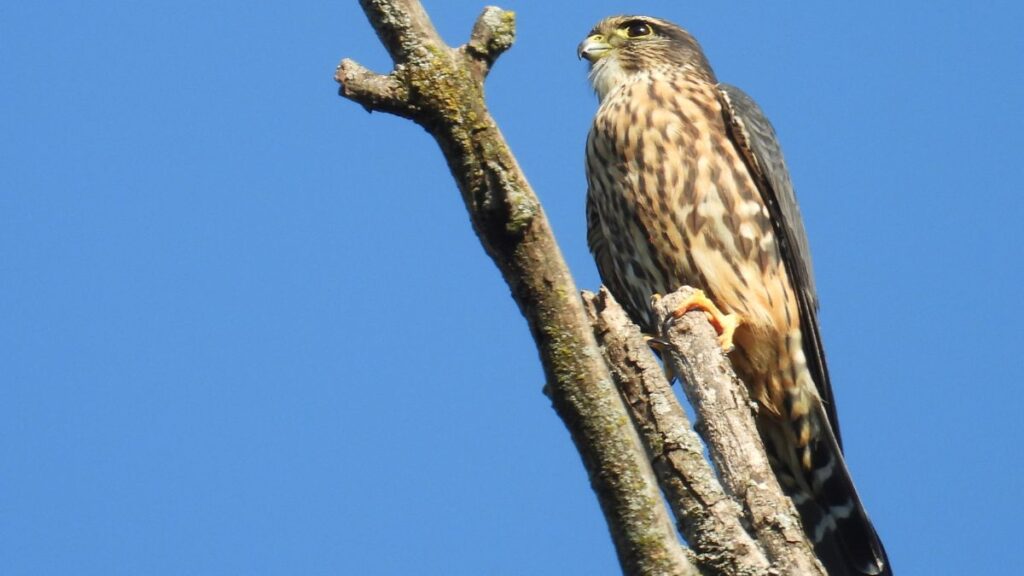
So many people are using the Merlin app for identification help these days. Above is what the eponymous bird looks like at rest.
On the first October Saturday morning in Thatcher Woods, part of the Cook County Forest Preserves, this streaky brown bird swooped in and perched high on a decaying tree, letting me capture this photo and confirm its merlin-ness.
I sometimes still confuse the merlin with the American kestrel (pictured at the very top of this post), especially at a distance. Like the kestrel, the merlin is a falcon (not a hawk, which has rounded wings).
Of these two smaller falcons, the merlin is stockier and heavier looking. And whereas kestrels tend to perch up high, hover, and dive for their prey on the ground, the merlin flies at high speed through the air to capture its prey, mainly smaller birds.
3. Palm warbler
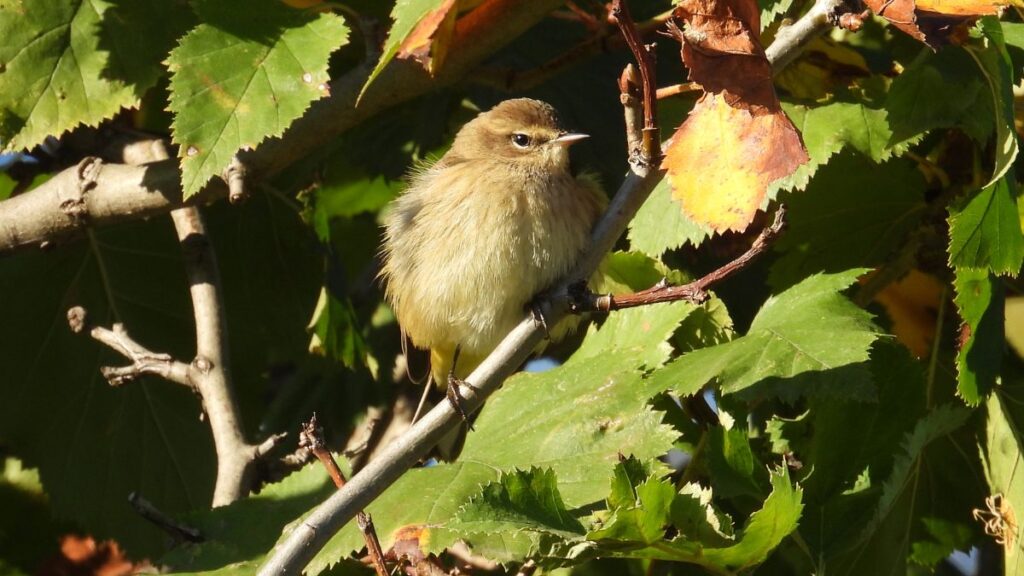
Speaking of smaller birds, here’s the palm warbler. You can see these cuties hunting insects especially on the ground, bobbing their tails up and down as they walk.
Even without binoculars, if you see a little brown and yellow warbler constantly pumping its tail, you can probably bet it’s a palm, a very common migrant.
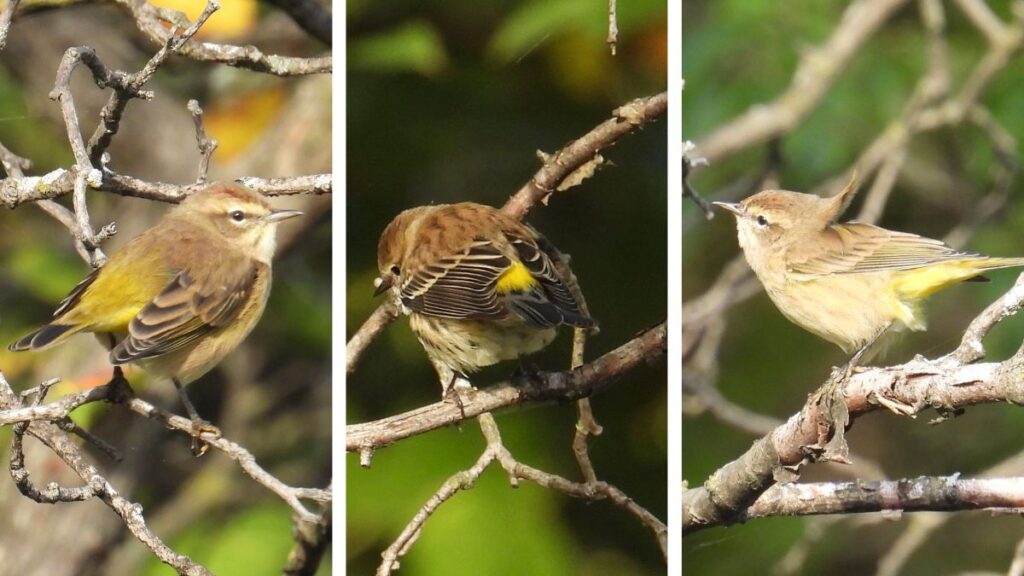
Like the yellow-rumped warblers streaming into Chicagoland this time of year, palm warblers also have yellow areas on their nether regions. But only yellow-rumped warblers (pictured below, center) are known as “butterbutts.”
4. Brown thrasher
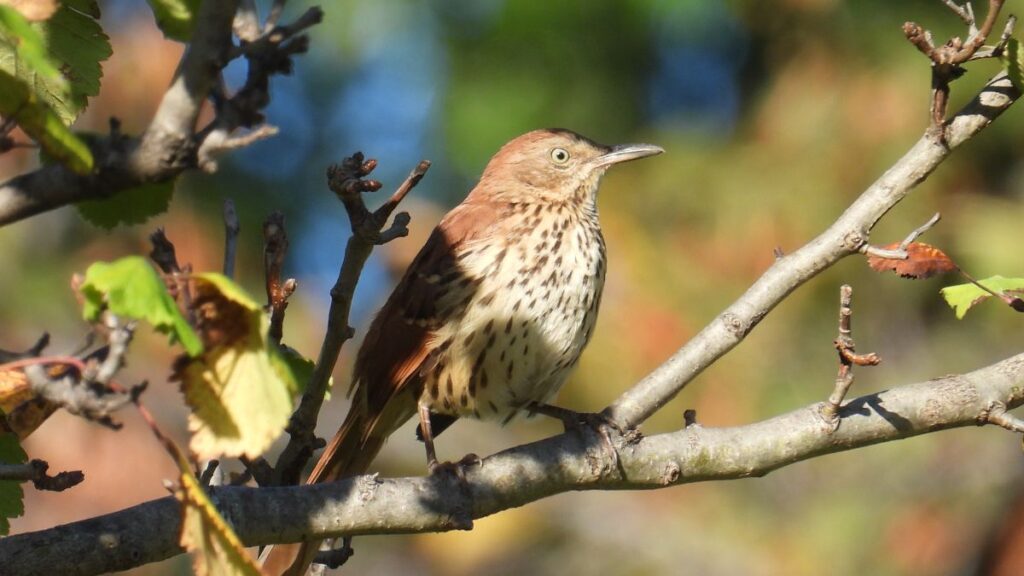
Okay, this one’s hardcore. If you see the brown thrasher in person, I think you’re going to get hooked.
Like the Eastern towhee, another elusive favorite, the brown thrasher can be hard to spot in dense thickets and on the ground among the leaves. It’s about blue jay size but longer, with yellow eyes and a long down-curved bill it uses to sweep through leaf litter and rustle up food.
Its tail is really long, and it’s a rich cinnamon brown overall with streaks on its breast. For a somewhat “mean”-looking bird, it’s very pretty.
5. Belted kingfisher
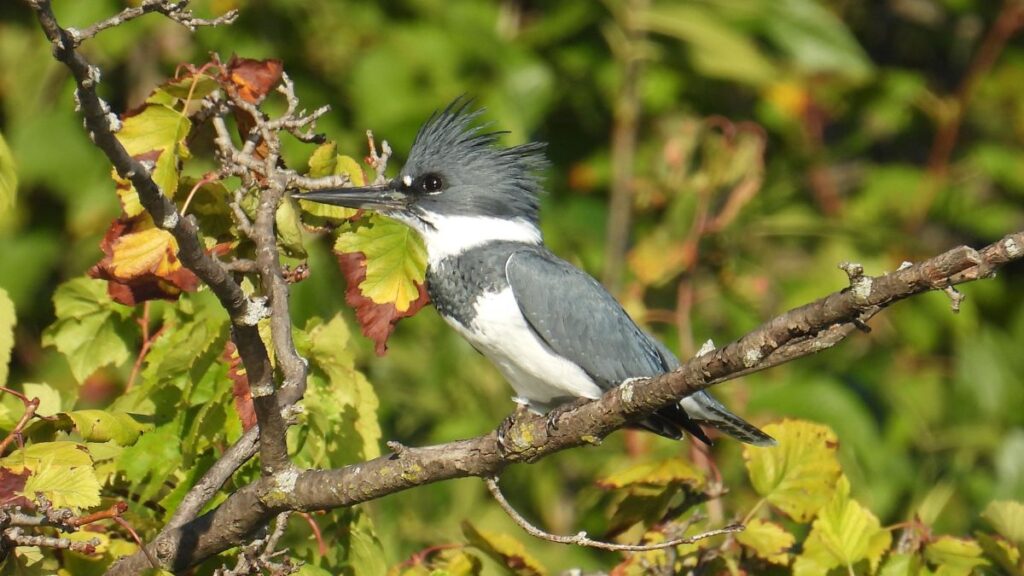
Speaking of hardcore, enter the belted kingfisher.
This resident Illinois bird has a punk rock hairstyle, a rattling call, and a big ol’ bill it uses to spear fish as it dives headfirst into bodies of water. It’s so fierce that University of Illinois at Urbana-Champaign students proposed it for the school’s new mascot starting in 2019, after the controversial Chief Illiniwek mascot was retired in 2007.
It’s not official yet, but students have taken matters into their own hands and sewn a costume for the increasingly popular, yet still unofficial mascot that appears around campus and on game days.
As supporters say, the belted kingfisher is “naturally true to the orange and blue.” The female has a rusty orange band across the belly, to accompany its steely blue back. Go Illini!
6. Black-throated blue warbler
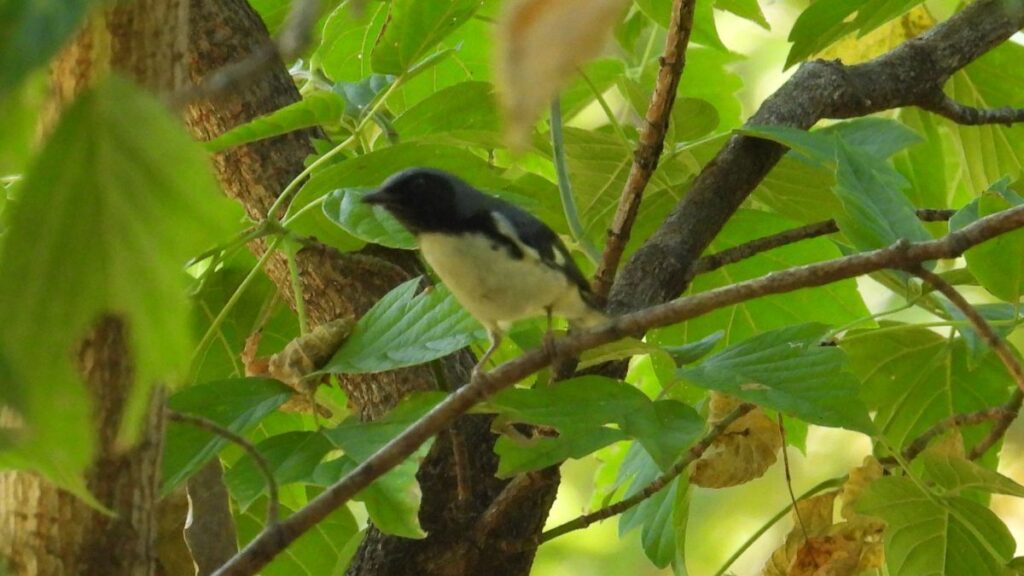
Like many wood warblers, the black-throated blue is fast and hard to photograph, although they do tend to stay more at eye (shrub) level versus, say, Blackburnian warblers, which forage high up in the canopy.
Above is a blurry photo of a male I took in early October in Thatcher Woods, part of the Cook County Forest Preserves. Here are some more striking images from the Cornell Lab of Ornithology (and you can see how the females look almost completely different).
7. Golden-crowned kinglet
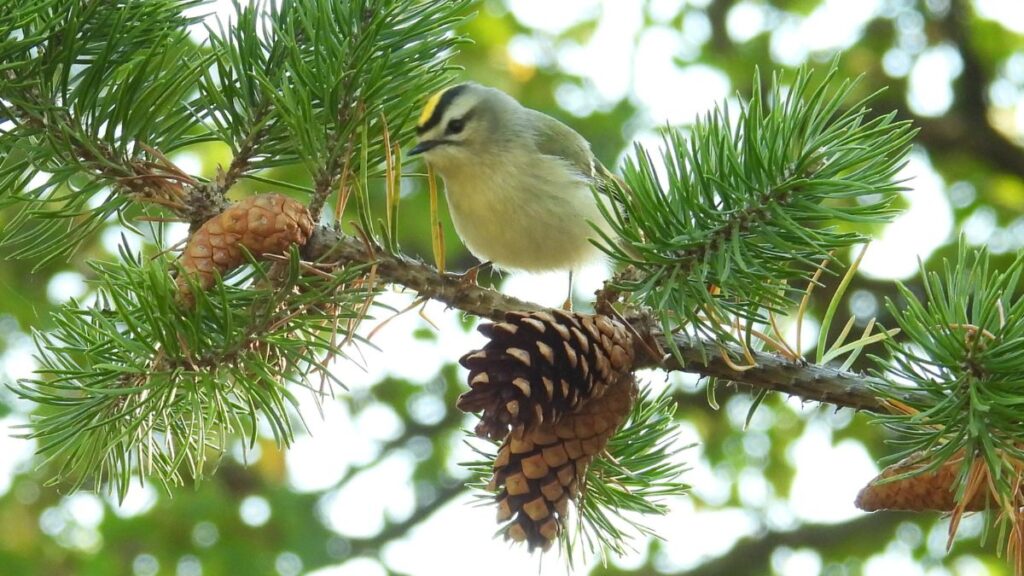
These puppies can be hard to see, they’re so tiny and flitty. You often hear their high-pitched, thin calls high in the trees in the fall and into winter.
Both sexes have black stripes with a golden yellow patch in the middle, but only the male is a bit extra, with reddish orange feathers he can flash up when excited.
And if you like golden-crowned kinglets, you’re gonna love ruby-crowned ones!
8. Dark-eyed junco
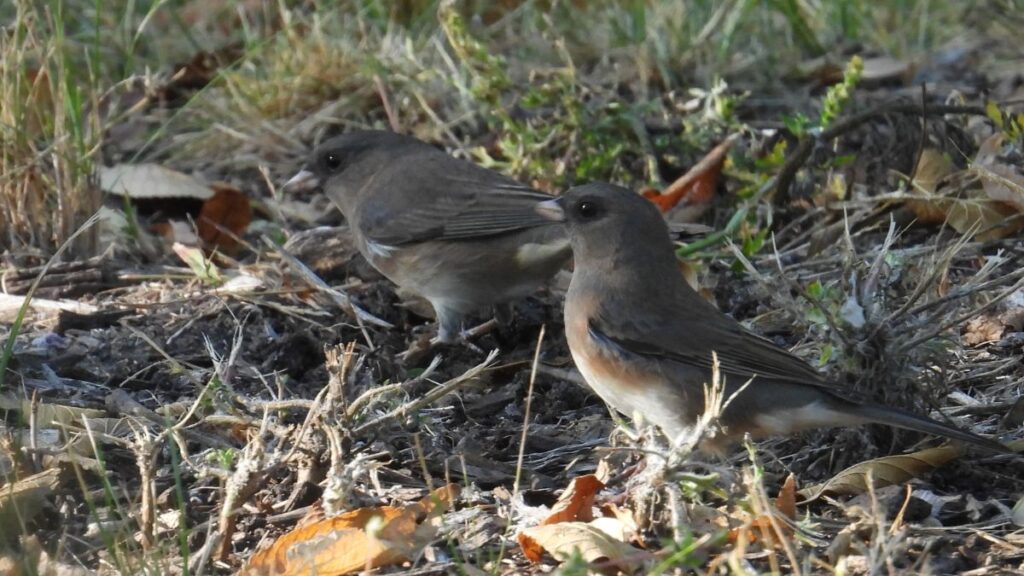
Welp, it’s really fall when the dark-eyed juncos show up.
There’s a lot of variation in dark-eyed juncos depending on where you are. In Illinois, we see the slate-colored ones most commonly, throughout fall and winter.
I took this photo on September 29, and these look to me like female and/or young juncos, for the brown coloration mixed in with the slate gray.
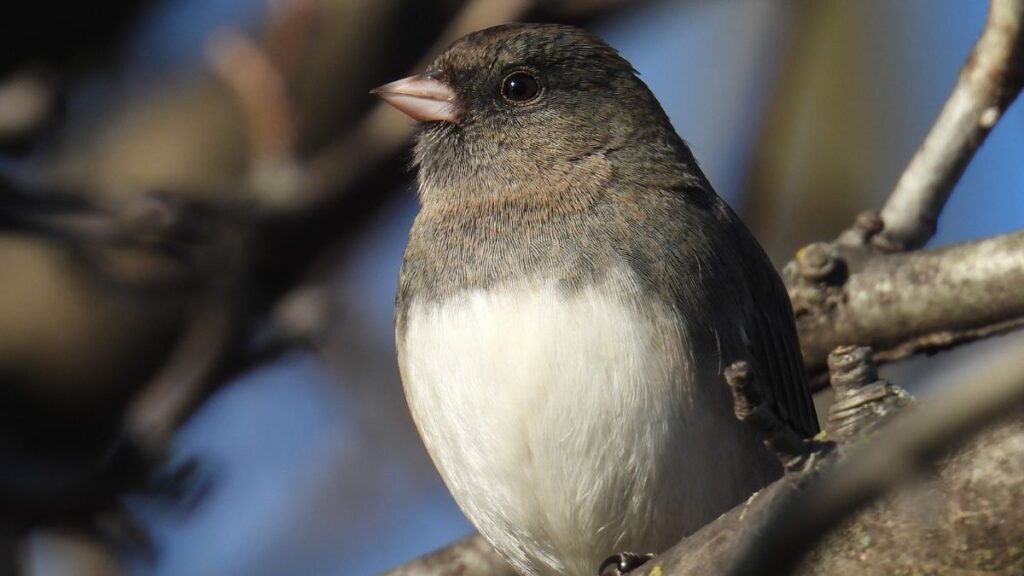
Fun fact: All juncos are sparrows, but not all sparrows are juncos. And that’s a good thing, because I’m excited for the fox sparrows to show up near me soon!
Bonus: American pelican
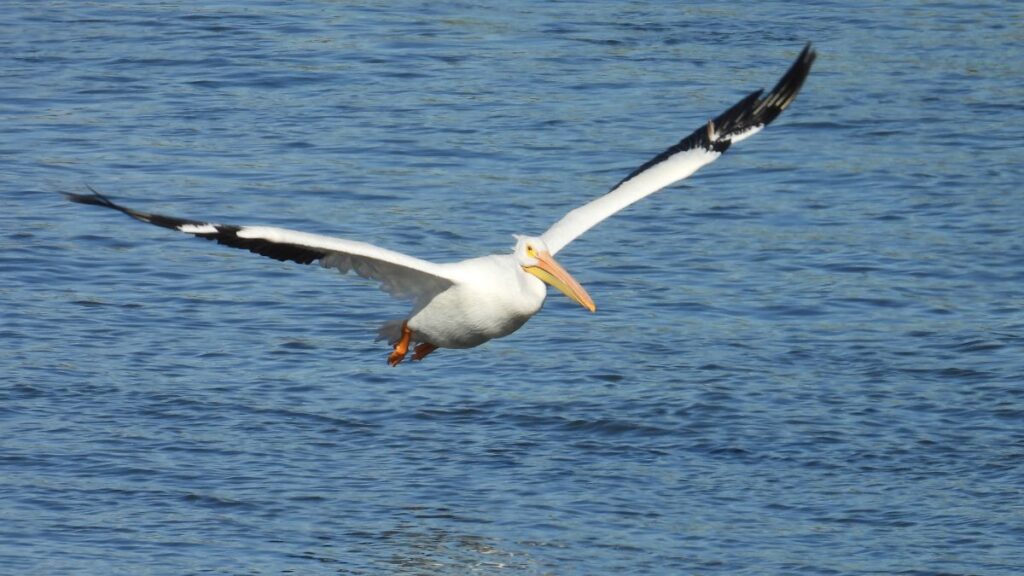
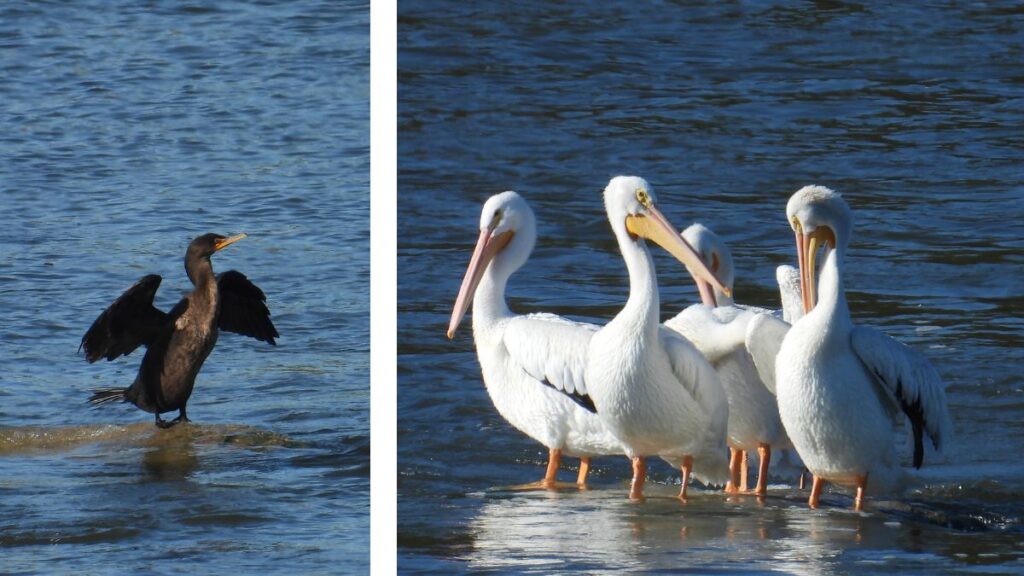
This American white pelican would be an uncommon sighting for Chicago. However, I took this photo downstate by Starved Rock State Park on October 9, where they’ve become common. That morning, at least 80 pelicans were congregating on the Illinois River by the Starved Rock Lock and Dam, along with more than dozen double-crested cormorants (which we do have in Chicago).
According to the Cornell Lab of Ornithology, populations of American white pelicans have rebounded since lows in the mid-1900s. Around Starved Rock, you can expect them to stick around through November and return in March.
Leave a Reply