
Last Monday, just about when the fall warblers started appearing in my neck of the woods, I hurt my back.
I was hurrying and bending over to put on my shoes when it happened. The tweak, the pull, the whatever it was, left me pretty well incapacitated for the next couple days.
Meanwhile, the warblers were showing up, one after the other, at my local birding hotspot. It was the last full week of August in Chicagoland, and a cool front had moved in over the weekend. It was time.
Canada, Blackpoll, Blue-winged, Cape May. I could only scroll the eBird reports as I lay in bed with an ice pack.
Bad back, good backyard
By Wednesday, I could hobble around better. A walk to the park was not yet in the cards, but I could go to the back door and look out at the yard.
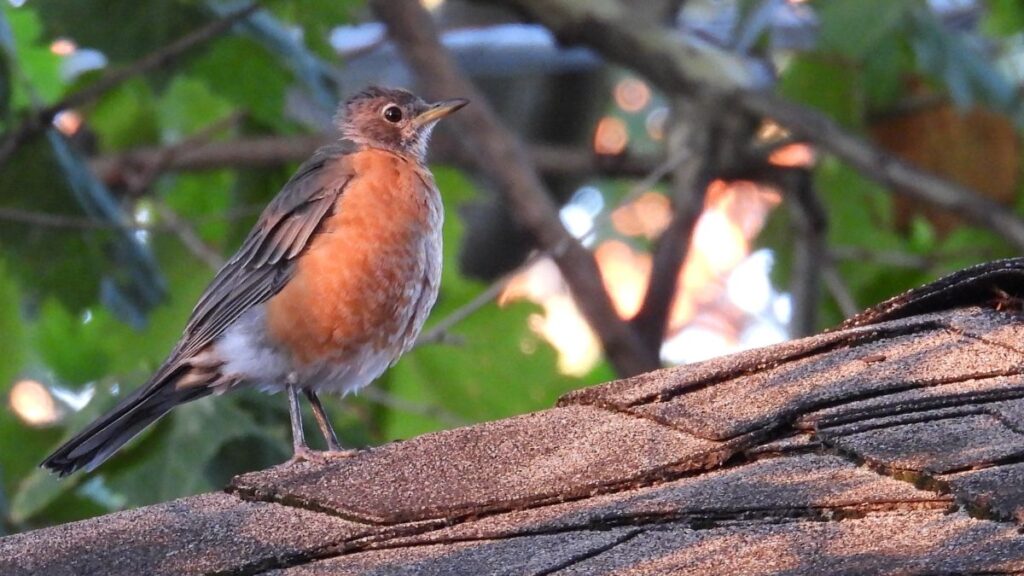
And you know what? Robins, many more than in previous days, were sitting on the deck and the fence, hopping through the yard, flying from tree branch to garage roof to electrical wire.
These robins must have come from somewhere else, I thought, for how many of them there were compared with a few days earlier. For how urgently they seemed to be hopping through my yard, rustling up insects. They seemed to be gearing up for something.
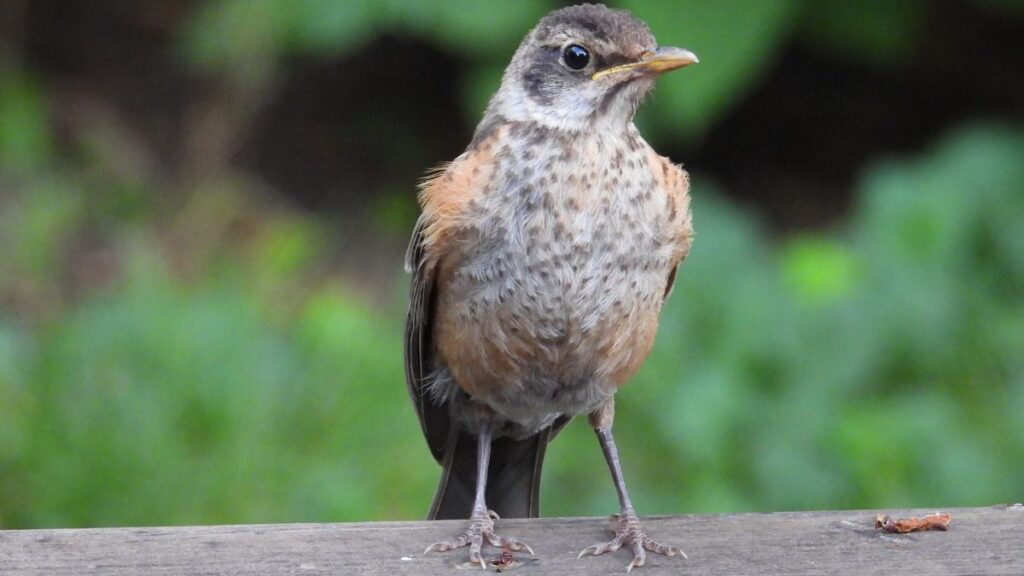
There were spotty young ones, like the juvenile pictured above. They sat and waited on the deck railing for the adults, brighter and more solid, to fly over with a snack.
Was migration happening in my backyard?
Being here now with Turdus migratorius
According to Cornell Lab’s All About Birds and the American Bird Conservancy, robins are short-distance migrants.
The scientific name for the American Robin is Turdus migratorius. So while robins are year-round residents in Chicagoland, where I also live, they are literally known as the “migratory thrush.”
In August, robins begin to move from where they nested and hatched their young. They flock together in larger numbers to forage for berries and insects, moving around to where the food is.
Maybe these particular robins came from just north of Chicago. Or maybe the next suburb over. After my yard, maybe they would head down to central Illinois. Or to the next yard, at least.
It’s interesting to wonder. To not know for sure.
What I do know is that no matter where they came from and where they were going, these little ones in my backyard were making me feel connected to the wider world, at a time I felt I was missing out.
Not just a robin
Sometimes when I pull my binoculars up to spot a bird that just flew into the trees, I adjust the lenses and realize: “Oh, it’s just a robin.”
We are so used to robins in the Midwest. They’re always running around our yards and parks, and it’s easy to overlook them. They’re basic birds. Dependable, not the flashiest, not the hot new thing.
But I have to continually remind myself: “No. It’s not just a robin.”
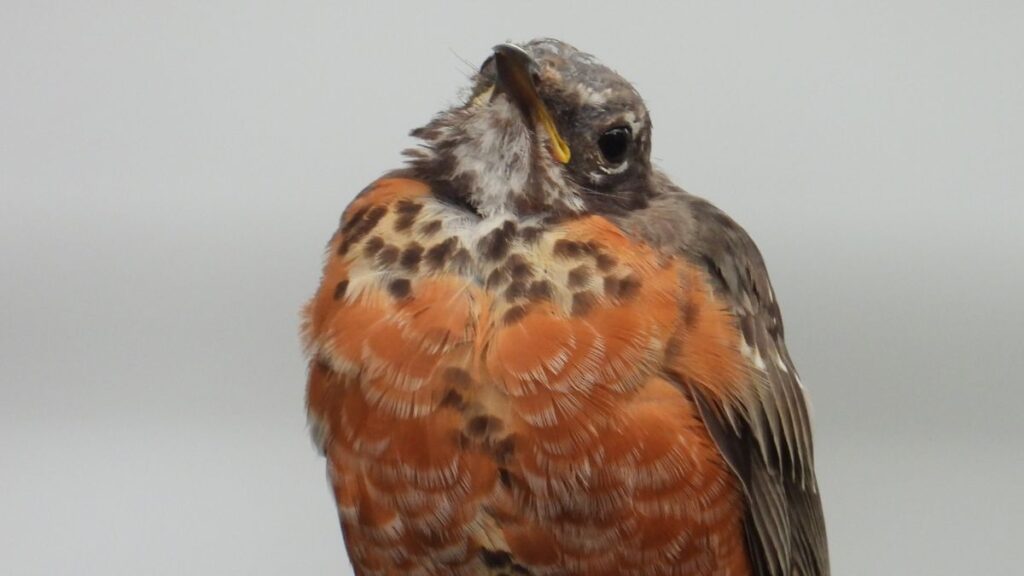
Because if you keep the focus on that single robin you spotted, if you don’t put the binoculars down—my god, they are beautiful. Just as beautiful as any other bird.
And they’re right here, right now.
Leave a Reply